




For many people today, the reference point for AI is a large language model developed by a global technology company: a system requiring vast computational infrastructure, carrying concerns about hallucinations, environmental impact, and dependence on firms headquartered elsewhere.
Those associations shape how people think about AI wherever it is used, including in public services. They also shape what people trust.
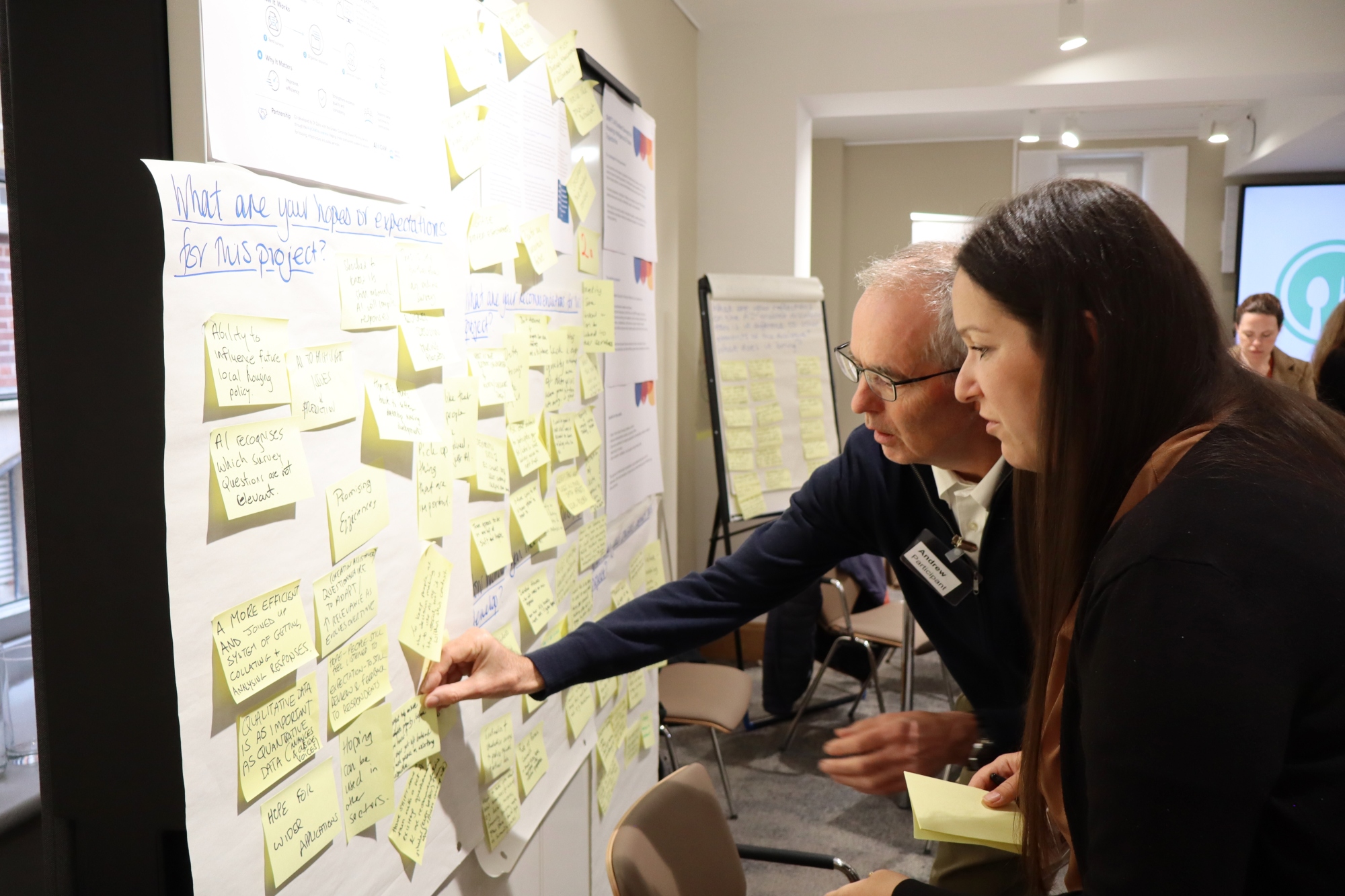
Over the past six months, working with Hopkins Van Mil, ai@cam brought together residents from across Cambridgeshire to explore how AI should be used in local government. Participants first helped set the selection criteria for our AI for Local Government Accelerator. They then returned to explore the work of our six Accelerator-funded research projects directly with the researchers building them. The report we are publishing today describes what they said.
The discussions repeatedly returned to questions “AI” projects can overlook: What problem is this solving? Why is AI the right technology for this task? Will residents notice any difference? Could the same outcome be achieved more simply? Participants were comfortable with AI automating repetitive administrative work, such as digitising hand-drawn planning maps or compiling housing surveys, and more cautious where systems touched vulnerable people or consequential decisions.
As the dialogue progressed, another type of question emerged. People were asking what kind of public services should AI help build, and what kind of AI should public services depend upon.
Running underneath discussions about planning, housing and fly-tipping were concerns about who develops these systems, where the data sits, whose jurisdiction it falls under, whether the technology can be scrutinised, and what happens when essential public services become dependent on suppliers that answer to no one locally. One participant captured that concern directly: “I do not want that happening with my data in local government… at some point in the future an American company will come in and they will be better and cheaper.”
This wasn’t an argument against international technology companies or a rejection of AI. It was a concern that, unless public institutions establish their own terms of engagement early, short-term decisions could gradually determine the shape of public services. That concern changed the way participants evaluated the projects themselves.
Several of the Accelerator projects looked very different from the AI participants had imagined. Rather than frontier foundation models, researchers were building relatively small, task-specific systems. Many used open-source software. Data remained under UK governance. In every case, human judgement remained central to decision making. When those technical and institutional choices were made visible, participants’ assessments changed. A task-specific system for processing planning maps was judged differently from “AI” as an abstract category. Participants understood why a computer vision model performing a narrowly defined task raised different questions from a general-purpose language model. As one participant observed: “This is a data project and not a human project. And that’s what machine learning is best at.”
Across the dialogue, we also heard participants push the conversation beyond individual technologies altogether. When discussing predictive maintenance for social housing, they asked whether councils had the capacity to act on the information AI might generate. When discussing planning, they asked whether AI could simplify planning processes rather than accelerate existing bureaucracy. When discussing fly-tipping, they asked whether detection technology addressed the real problem, or whether waste disposal policy itself needed attention.
In each case, participants redirected attention away from AI and back towards public services. As well as asking how AI could optimise today’s policy processes, they were asking how this moment of technological change could become an opportunity to improve the institutions themselves.
Taken together, participants described a distinctive vision for AI in public services: AI built close to the problems it is trying to solve, by institutions with a stake in the places they serve. AI where governance is visible and methods can be scrutinised. And where benefits are shared, with efficiency gains reinvested into better public services. In other words, participants were asking us to think about AI as public infrastructure to be stewarded.
Universities have an important role in that model. Throughout the dialogue, participants told us they valued the University’s independence from both government and commercial interests. They valued bringing researchers, councils, and residents into the same conversation. They valued research that could be shared openly with other local authorities.
That describes a model of AI innovation that is more collaborative, and often less visible than the latest progress in frontier foundation models. It also reflects the way public institutions themselves work: through stewardship, accountability, and long-term investment. As governments consider how AI should become part of everyday public services, the question is what kind of public infrastructure we want AI to become.
Read our report: Public Dialogue on AI in Local Government