



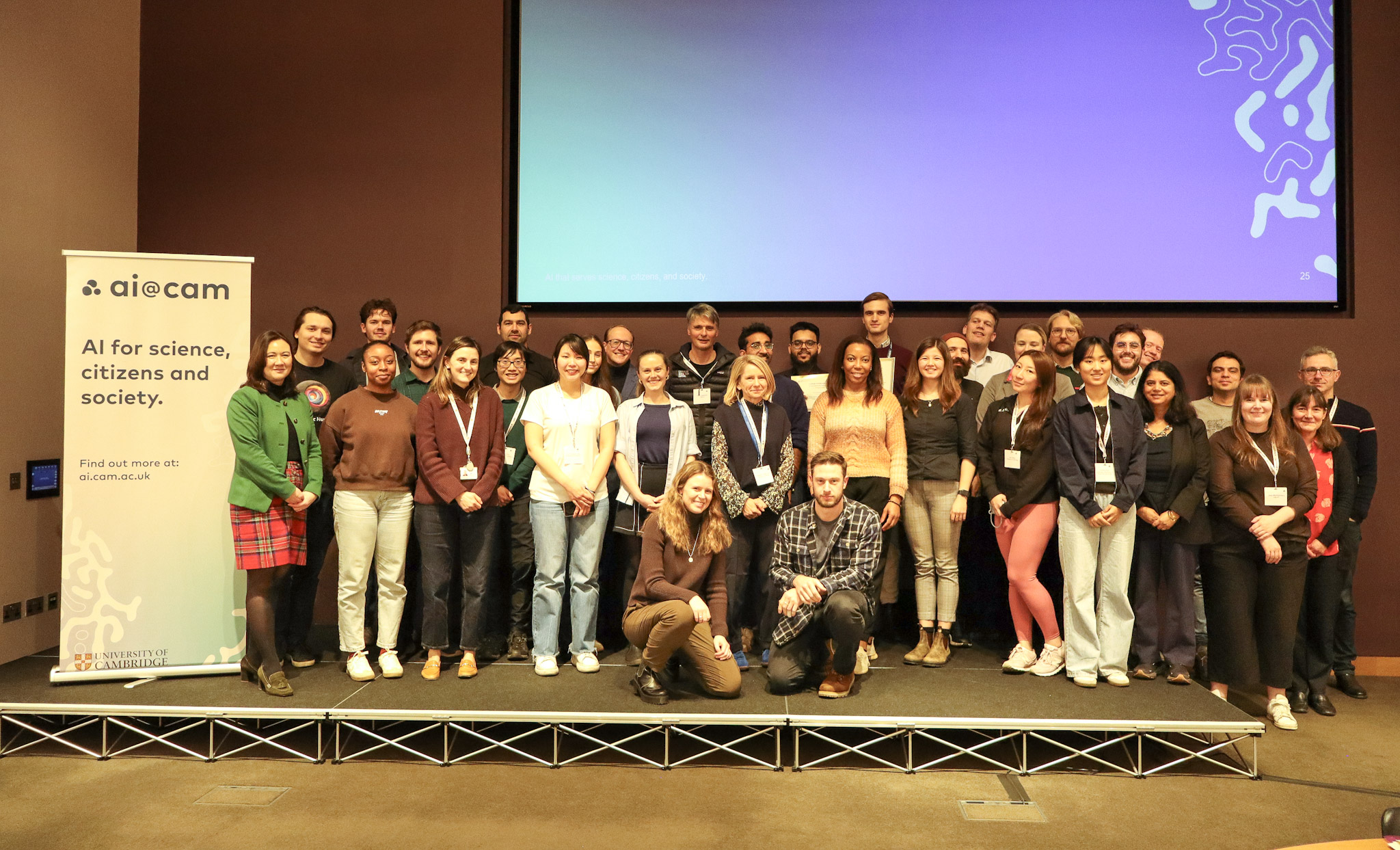
Researchers from across the University of Cambridge gathered last week for the second annual ai@cam AI Sciencepreneurship Bootcamp, an intensive two-day programme designed to help translate AI-enabled research into real-world ventures.
Building on the success of its inaugural year, the bootcamp brought together PhD students, postdoctoral researchers and early-career academics working at the intersection of AI and science. Through practical workshops, mentoring and a pitch showcase, participants explored how to turn promising research into viable start-ups, with prizes awarded for best project and best pitches.
Project Prize winner
The £3,000 Project Prize was presented to Syed Haider for Vocaloci, an AI-powered speech assistance tool designed to support people who stutter. The tool addresses longstanding gaps in how mainstream voice technologies handle disfluent speech.
“Joining the bootcamp has been an incredibly valuable experience alongside meeting Cambridge founders, VCs, postdocs, and professors,” said Syed Haider. “At its core, my tool aims to revolutionise communication technologies, making them more inclusive and accessible. Winning the Best Project Prize has given me real momentum, confidence, and support to continue building the technology and moving it towards real-world use. I’m also grateful to my team at the Isaac Newton Institute — Dr. Milla Kibble, Dr. Ewan Kirk and especially to my brother, Syed Muhammad Shahmeer Haider, for helping me develop the technical foundations of my AI idea.”
Pitch Prize winners
Pitch Prizes were awarded to three ventures recognised for the strength of their project presentations:
ClarifAI – Stefan Bucher
ClarifAI applies machine learning to behavioural evidence to generate scientifically grounded “comprehensibility scores” for complex documents. The tool could support organisations in meeting regulatory standards by evaluating how information is likely to influence real-world decision-making.
Loquelo – Karol Wapniarski and Jeremi Jaksina
Loquelo reimagines digital language learning by using AI, providing a platform for immersive learning where learners build understanding through contextual reading tailored to their individual level.
NOA Health – Claire Coffey
NOA Health is an AI-driven preventive health platform that translates routine biomarker and wearable data into insights designed to complement existing medical care.
The pitches were assessed by a panel comprising of Kathryn Chapman (Innovate Cambridge), Neil Lawrence (ai@cam), Jess Montgomery (ai@cam), Mahesh Santiapillai (Cambridge Enterprise) and Eno Thereska (Trent AI), who praised the ambition and quality of the projects presented.
Reflecting on the programme, Kathryn Chapman said: “This bootcamp is unique in offering researchers both the practical tools and the structured framework to take the next step towards building a venture. The quality of the pitches has been exceptionally high, with participants demonstrating not only technical depth but a clear understanding of real-world impact and commercial potential.”
Now in its second year, the AI Sciencepreneurship Bootcamp continues to strengthen Cambridge’s growing AI for science community. By bringing together researchers, founders and investors, the programme is fostering a new generation of science entrepreneurs committed to developing AI solutions that deliver meaningful public value.