




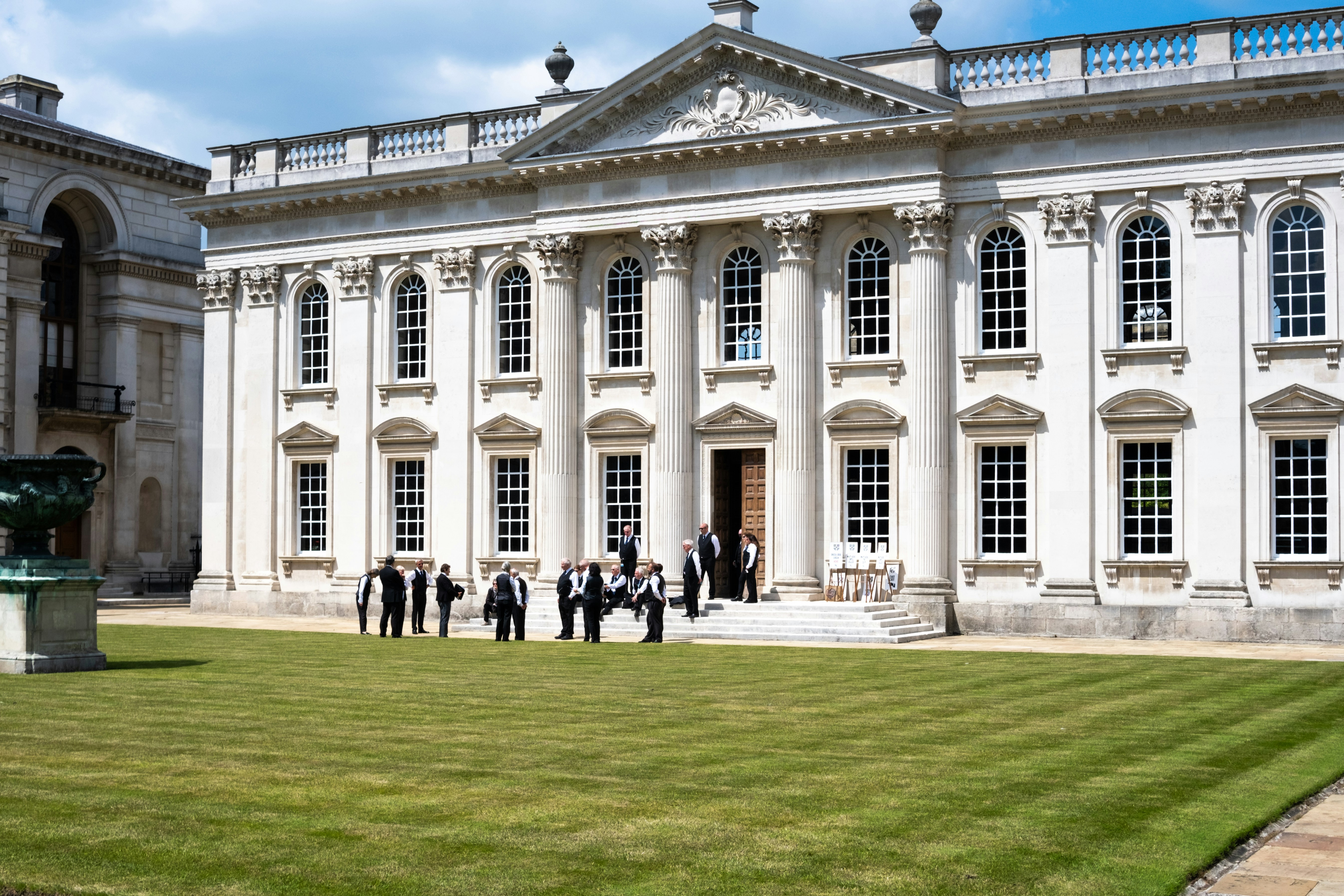
At the heart of the University of Cambridge’s complex governance structure there are more than 200 formal committees that oversee everything from estate management to student wellbeing. Providing administrative support for these committees is no mean feat – with each group requiring meticulously recorded minutes, accurate actions and detailed reports. This resource-intensive task is spread across the University’s professional services, with Jo Craigwood’s Governance Support Services team supporting many of the most senior committees.
When Jo heard about the AI for Ops funding call, she saw a clear opportunity to explore how AI could support her overstretched team’s workload, especially as the University is looking to make significant cost-saving measures over the next few years.
“We had been looking at ways to streamline our work and make efficiencies,” says Jo. “Our team has a very high workload and supporting the committees takes up a lot of time. My main goal, really, is that my team aren’t working evenings.”
This prompted Jo to put forward a proposal to ai@cam to explore how AI tools could help reduce time spent on committee administration. Her initial thinking was to focus on four of the most time-consuming tasks with the highest potential for time savings: minute taking, drafting actions lists, summarising lengthy documents for cover papers and writing annual reports. She was clear that experienced staff would edit anything AI helped produce.
At the same time, her colleague Jackie Hall at the Office of the School of Clinical Medicine was putting forward an almost identical proposal to the ai@cam team.
“I had already started using Copilot 365 myself and I thought it might be really useful for my team to explore some other AI tools that might help them, particularly with trying to save time on minute taking,” says Jackie, who is Head of General Division for the Clinical School.
“It can take a whole day to write up minutes from one School council meeting,” she says. “It just didn’t seem like a good use of people’s time. From our point of view, budgets are tight and there’s more work than ever so actually looking for efficiencies in what we do made sense. We want to save people’s time so they can add value in other areas.”
Pooling resources
Under AI for Ops programme, Jo and Jackie are now working together to trial different AI tools – including Microsoft Copilot, Claude Team and ChatGPT Business – to find out which of them performs best for committee administration purposes.
They have already agreed on a set of shared principles to make sure that AI is being used securely and responsibly. Administrative colleagues and committee members have been involved from the outset, with the trial initially taking place across a small number of committees.
“I think we all agree that the way we want to use AI is to enhance human judgement, not replace humans,” says Jo. “And I don’t think it ever could, actually. There will always be the need to check and guide an AI tool. We are using AI tools in such a way as to enhance human skills, job skills and also job satisfaction.”
Jackie has been surprised by how well some of the AI tools have performed – but she admits they are far from perfect yet. “I’d say it’s probably about 80% of the way there,” she says. “It’s giving people a really good draft to do the final tweaks from … and it’s still saving time.”
Setting clear guidelines
The pilot project will track time savings and gather feedback from committee secretaries, chairs and subject experts on measures including job satisfaction. Early feedback has been largely positive, although there has understandably been some nervousness.
“Like many people, some members of the team were initially a little uncertain about using AI,” says Jackie. “We’ve talked it through quite openly and I think it’s important to recognise that it takes time to become comfortable with new ways of working.”
Recognising that University committee business often involves sensitive information, Jo and Jackie performed extensive due diligence before the pilot project even began – running the AI tools past Information Compliance and the Chief Information Security Officer to ensure the tools met the University’s data protection and legal requirements.
To address the concerns raised by committee members, the team established clear safeguards, including not using AI to record highly confidential discussions, restricting access to meeting recordings and deleting recordings once notes had been finalised. Staff were involved from the outset through workshops, helping to shape the trial and develop a shared understanding of how the technology should be used.
Impetus for action
Looking ahead, the team’s ambitions for the project remain high. The aim is to reduce the time spent on minute taking and other administrative tasks by more than 50%. To give just one example: each of the ten University committees taking part in the trial meets four to eight times per year. Halving the time needed to produce minutes could potentially save around 25 person-days each year thinks Jo.
The ultimate goal is to create a set of easily replicable AI prompts for generating minutes and other administrative reports, alongside user guidelines on where human judgement remains essential.
If successful, the pilot project could be scaled up across dozens of committees in all corners of the University – potentially saving hundreds of person days each year.
“The AI for Ops funding has enabled us to really understand the potential of AI in this area,” says Jo. “I think it’s also provided us with the impetus – sometimes you just need a reason to try things. If AI was adopted more widely across the University’s committees, the potential is enormous – transforming one of the most time-consuming aspects of committee administration.”