




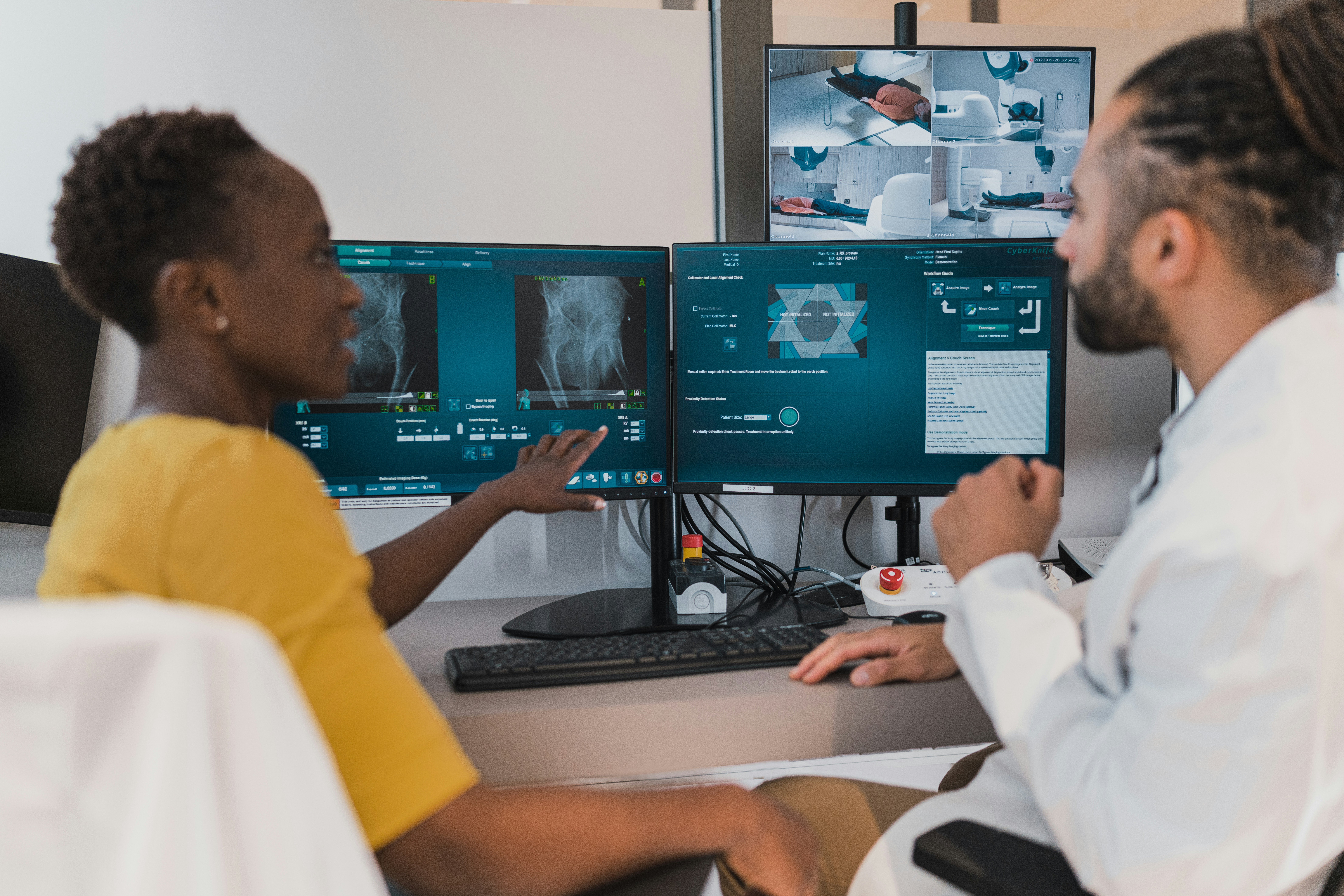
Software as a Medical Device (SaMD) is software intended to perform a medical purpose, such as supporting diagnosis, or monitoring a treatment, without being part of a hardware medical device. These innovations range from software that analyses CT images to help identify tumours to applications that interpret physiological measurements, such as heart rhythm. Around two dozen SaMD projects are currently being developed across the University of Cambridge and Cambridge University Hospitals NHS Foundation Trust.
However, for the innovators behind these tools, it’s not just the research that’s a challenge. Like other medical devices, SaMD must meet clear regulatory requirements. This normally requires controlled technical documentation demonstrating that the software has been designed and is safe to perform as intended.
Depending on the device and regulatory pathway, this documentation may include dozens of controlled records covering quality management, clinical evaluation and cybersecurity. Preparing this material may require substantial input from researchers, software developers, quality specialists, clinicians and regulatory professionals.
“There are multiple layers of risk management and assessment throughout the process,” explains Reza Salek, MedTech Translational Research Programme Manager at the Office of Translational Research. “These are highly document-intensive and cumbersome. And the required quality and regulatory expertise is often outside the domain expertise of the researchers.”
The scale of the work varies substantially according to the device’s intended purpose and target market. External regulatory support can also be expensive, particularly when extensive documentation must be created retrospectively or when evidence and development records are incomplete.
Cost of compliance
“Every time significant deficiencies are identified, resolving them can be expensive and time-consuming,” says Reza, who likens the process to the high stakes of taking a driving test. “If you do not pass, you can’t retake the test right away – and you have to spend a lot of time and money going through that whole process again.”
To overcome this roadblock, Reza and his team in the University’s School of Clinical Medicine have developed two complementary AI-enabled tools. RegPathfinder supports early-stage SaMD projects by structuring product information, exploring potential regulatory pathways and identifying evidence gaps for expert review.
SaMD Tech-file Workbench complements this by using project evidence to support the preparation and review of technical documentation, while maintaining traceability between evidence and outputs. Developed with support from ai@cam’s AI for Ops programme, the tools are designed to reduce the time spent on initial drafting and document assembly, while improving consistency, traceability and readiness for expert review. Together, they could help medical innovations navigate the regulatory process more efficiently and ultimately reach patients sooner.
“If these tools can help learners become test-ready in two lessons instead of six, imagine the time and money it could save,” says Reza. “That’s exactly what we’re trying to achieve: identifying gaps earlier, reducing avoidable rework and helping projects prepare more effectively.” The goal is to make regulatory planning and documentation preparation more structured and repeatable, reducing administrative burden while preserving the scientific and regulatory judgement required.
With appropriate permissions and access controls, the AI-enabled Workbench can use information from authorised project sources. Its capabilities are being extended to support controlled project repositories, including appropriate locations in GitHub and OneDrive. The Workbench uses project records alongside regulatory requirements to support drafting and completeness checks.
“It doesn’t replace regulatory expertise by any means,” says Reza. “But it does make it a lot easier. Rather than starting from a blank page, researchers can begin with a structured draft based on the information already available.”
To ensure accuracy, the Workbench provides source references for generated sections and flags statements that cannot be linked to authorised source material. Drafts are intended to enter the organisation’s electronic quality management system (eQMS), where authorised reviewers can assess, revise and approve them under controlled procedures.
“There’s still a human in the loop,” says Reza. “A suitably qualified expert must check that the right information has been captured, that the evidence supports the claims being made and that the appropriate process has been followed.”
The potential time savings could be significant, allowing researchers to spend less time on administrative tasks and more time advancing their research. The AI-enabled Workbench is intended to reduce the effort required for initial drafting and subsequent revision cycles.
“The process can move faster, but quality still takes time,” says Reza. “The real question is how you choose to spend that time. If routine drafting tasks can be completed more quickly, researchers and regulatory specialists can concentrate on the quality assurance that require expert judgement.”
Funding through the AI for Ops programme has enabled Reza and his team to evaluate and develop AI-enabled tools that help researchers with regulatory pathway planning without weakening governance or expert oversight.
By evaluating a range of approaches, they have created a set of tools intended to make regulatory planning and documentation preparation faster, more consistent and easier for researchers to navigate. Looking ahead, the SaMD Tech-file Workbench could support other University departments developing regulated digital products.
“This opportunity has given me the freedom to test and identify what works best, rather than being limited by the subscription, API and token-usage costs associated with evaluating different LLM tools,” says Reza. “It removed some of the pressure around deciding which tools to invest in and allows me to focus on developing the best possible solution for the University and its researchers.”